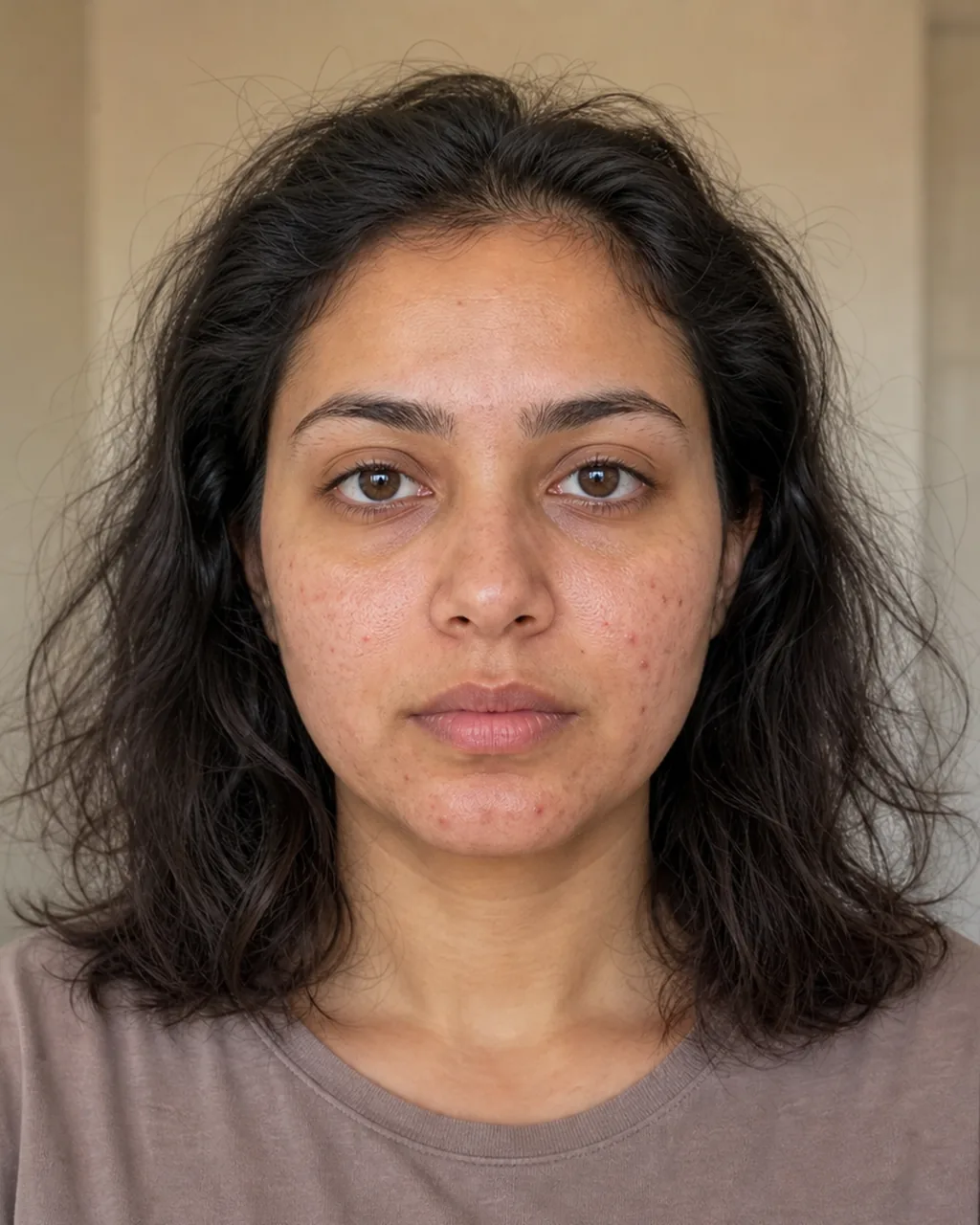
This is what the report looks like. The person is a sample photo and every reading below was written for this page — your report is built from your own photo and answers.
Front photo
Sample report
What you get for €49
September 14, 2026
The complete assessment for one scan, section by section: the care score, a face map placed on the photo, a reading of every visible attribute, the in-depth reading of three more photos with a daily routine and a week-1 shopping list, the one change that matters most, and a three-phase plan with costs and the published studies behind each step.
Your overall reading, and the one change that matters most right now.
Your care score
64Overall
Skin58
Hair71
average — room to grow
Score reflects skin & hair care quality, not attractiveness. 0–100.
Summary
What is working
1Dense hair with an even hairline at the temples and a narrow parting at the crown.
2Smooth forehead and calm skin along the jaw and neck.
3Full, naturally shaped brows that frame the face well.
Where to focus
1Even out the darker marks on both cheeks with daily SPF and niacinamide.
2Keep pores on the cheeks clearer with a mild exfoliating acid twice a week.
3Give the dry, frizzy lengths more moisture and less heat.
Inside the sample report
Mira Studio
↔
A · Dusty rosePersimmon · B
The draping room
Two shades. One face.
Slide the fabric beneath the chin. The muted shade gives a quieter frame. The stronger colour draws the eye to the neckline. Choose the effect you prefer.
Sample colour edit
Clay & rose
In this photo: medium colouring, a neutral undertone and moderate contrast. A styling estimate from this light.
The one thing now
Wear SPF 50 every morning and add a niacinamide serum in the evening — with consistent use, the marks on your cheeks typically start to fade after 8–12 weeks.
The highest-impact change for the next 4–8 weeks.
2
2. Skin & hair
Each area as it shows in your photo, read in bands rather than numbers.
Face map
Placing the map on your photo…
Areas are placed on your photo by face-point detection that runs in your browser. Colours are directional reads of what is visible, not measurements.
Attribute breakdown
Skin
Tone evennessWorth working on
BlemishesWorth working on
TextureRoom to improve
Under-eye areaRoom to improve
RednessGood
Shine / oilinessGood
Hair
Hair densityGood
HairlineGood
Hair conditionRoom to improve
Cut suits youRoom to improve
Grooming
EyebrowsGood
LipsRoom to improve
FreshnessRoom to improve
Directional read of what's visible in your photo — not clinical measurements. We don't score bone structure or attractiveness.
Aesthetic analysis
Well cared for overall: the hair is dense with an even hairline and the brows have a natural, full shape. The biggest opportunity is the skin on the cheeks, where small blemishes and darker marks make the tone look uneven. Daily sun protection and a short, steady routine would make the most visible difference.
Observations
Skin
Tone is uneven across both cheeks, with small darker marks where earlier blemishes have settled.
Skin texture
A few small raised blemishes on the cheeks and chin; the forehead is smooth.
Periorbital area
Mild shadowing under the eyes, more visible in this light than it would be in daylight.
Lips
Lips look slightly dry, with some flaking at the edges.
Hair
Good density and an even hairline; the lengths look dry and frizzy, which takes away some shine.
Eyebrows
Full and naturally shaped; a light tidy of stray hairs would sharpen the frame.
Proposed changes
Skin ·More even tone on the cheeks
Daily SPF stops the marks from darkening further, and niacinamide helps them fade over a few months.
Skin texture ·Smoother surface, fewer new blemishes
A gentle cleanser, a plain moisturiser and a mild exfoliating acid twice a week keep pores clearer without irritation.
Hair ·Less frizz, more shine on the lengths
A milder shampoo, conditioner on every wash and less heat styling help the lengths hold moisture.
Periorbital area ·Fresher look under the eyes
Regular sleep is the main lever here; a simple eye cream keeps the thin skin hydrated.
3
3. In depth
What your side and crown photos add to the front one.
From the other angles
Left side
Sample — illustrative. From the side, the marks on the cheek are easier to see than from the front, and pores are a little more visible near the nose.
Right side
Sample — illustrative. The right side matches the left: a few darker marks on the cheek, smooth skin along the jaw, an even hairline at the temple.
Top of the head
Sample — illustrative. Seen from above, the hair is dense with a narrow parting and a calm-looking scalp; the ends look drier than the roots.
Skin
Cheek textureRoom to improveA few small raised blemishes on both cheeks; smooth between them.
Cheek toneWorth working onDarker marks where earlier blemishes settled — the main focus of the plan.
Lines at the outer eyeGoodBarely any lines at the outer eye, even from the side.
Under-eye, from the sideRoom to improveMild shadowing that reads lighter from the side than from the front.
Skin along the jawGoodClear and even along the jaw on both sides.
Neck skinGoodEven tone and smooth texture on the neck.
Sun spotsRoom to improveA few small light-brown spots high on the cheeks; daily SPF keeps them from darkening.
Pores, from the sideRoom to improveSome visible pores on the cheeks next to the nose.
Hair & scalp
Hairline at the templesGoodEven and well defined at both temples.
Density at the crownGoodDense at the crown; the scalp barely shows through.
PartingGoodA narrow, even parting.
ScalpGoodThe scalp looks calm, with no visible flaking in this photo.
Lengths and endsWorth working onThe lengths and ends look dry and frizzy, which takes away shine.
ShineRoom to improveShine at the roots, less along the lengths.
4
4. Your plan
Steps in phases, each with its reasoning and the evidence behind it.
Your 30-day focus
Skin
SPF 50 every morning
A broad-spectrum SPF 50 as the last step of your morning routine, on every day including cloudy ones. Sun exposure darkens existing marks, so this is what lets everything else work.
Hair
Milder shampoo, conditioner every wash
A sulfate-free shampoo on the scalp only, and conditioner on the lengths every time you wash. Washing two or three times a week is usually enough for this hair type.
Lifestyle
Seven to nine hours of sleep
A regular bedtime is the most direct lever for the shadowing under the eyes and for how rested the face looks overall.
Start with these steps. The full evidence-backed plan is below.
Your plan
1
Foundations
Weeks 1–4
The few steps that do the most. Make these a habit before adding anything.
Skin
SPF 50 every morning
strong evidence
A broad-spectrum SPF 50 as the last step of your morning routine, on every day including cloudy ones. Sun exposure darkens existing marks, so this is what lets everything else work.
For you: The darker marks on both cheeks are what sun exposure keeps topping up.
Every morning; reapply when outdoors€10–20 a monthEasy to keep up
How to use it well
When it shows
It protects from the first day; marks usually look lighter after 8–12 weeks alongside the evening steps.
Swap
A drugstore SPF 50 fluid does the same job; for sensitive skin, a mineral-filter one.
Don't combine
Using too little: about two finger-lengths for face and neck, and skipping cloudy days.
See a professional if
A spot changes shape or colour, bleeds or keeps growing.
At your next scan
The marks on your cheeks look no darker, and ideally lighter, than in this photo.
Evidence
In a randomised trial, daily sunscreen users showed measurably less visible sun damage after four and a half years than discretionary users. Modern filters have a well-documented safety record.
A fragrance-free, non-foaming cleanser in the evening and a light moisturiser morning and evening. Keeping the skin barrier calm makes it easier to add actives later.
For you: Your skin reads calm along the jaw and forehead; a gentle base keeps it that way as actives come in.
Morning and evening€10–25 a monthEasy to keep up
How to use it well
When it shows
Comfort improves within days; the barrier benefit builds over two to four weeks.
Swap
Micellar water in the evening on days without make-up or heavy sunscreen.
Don't combine
Foaming or scented cleansers, and scrubbing with a cloth.
See a professional if
Tightness, burning or flaking that lasts more than a week of gentle care.
At your next scan
Skin looks even in texture with no new dry or flaky patches.
Evidence
Reviews of moisturiser studies show improved hydration and barrier function with regular use of simple, well-formulated products.
A leave-on lactic or salicylic acid product on two evenings a week, on nights you skip the niacinamide if your skin feels sensitive. Helps with small blemishes and surface texture.
For you: The small blemishes and surface texture on your cheeks respond to regular, gentle exfoliation.
2× a week, evening€10–20 a monthTakes some effort
How to use it well
When it shows
Texture often feels smoother within 4–6 weeks; marks fade more slowly.
Swap
A gentler PHA product if lactic or salicylic acid stings.
Don't combine
Using it on the same evening as retinol, or more than twice a week at first.
See a professional if
Burning, peeling or redness that lasts more than a day.
At your next scan
Fewer small bumps and a smoother surface on the cheeks.
Evidence
Alpha-hydroxy acids applied regularly improved surface texture and evenness in a controlled study.
A simple, fragrance-free eye cream at night. It will not change shadowing caused by structure or sleep, but it keeps the thin skin under the eyes comfortable.
For you: The skin under your eyes reads slightly shadowed and dry; this keeps it comfortable.
Every evening€10–25 a monthEasy to keep up
How to use it well
When it shows
Comfort is immediate; fine dry lines may look softer within a few weeks.
Swap
Your regular fragrance-free moisturiser, patted on gently, works too.
Don't combine
Rubbing, and acids close to the lash line.
See a professional if
Swelling, itching or a rash around the eyes.
At your next scan
The under-eye area looks smoother; shadowing changes more with sleep than with cream.
Evidence
Under-eye shadowing has several causes; topical care helps mainly with hydration and the look of fine lines, and sleep matters more.
A sulfate-free shampoo on the scalp only, and conditioner on the lengths every time you wash. Washing two or three times a week is usually enough for this hair type.
For you: Your lengths read dry and frizzy at the ends while the scalp looks healthy.
2–3× a week€10–20 a monthEasy to keep up
How to use it well
When it shows
Lengths feel softer after the first few washes; frizz settles over a month.
Swap
Any gentle, sulfate-free drugstore shampoo; a co-wash on in-between days.
Don't combine
Shampooing the lengths themselves, and washing daily.
See a professional if
An itchy, flaking or sore scalp, or hair coming out in patches.
At your next scan
Smoother lengths with more shine and less frizz at the ends.
Evidence
Conditioners reduce friction and static between hair fibres, which is what shows up as frizz and lost shine.
Drink regularly through the day and keep fruit, vegetables and oily fish in your week. Helpful for skin, though slower and smaller than the steps above.
For you: It supports everything else in the plan: small, but steady.
DailyFreeEasy to keep up
How to use it well
When it shows
Effects are gradual, over months rather than weeks.
Swap
Herbal tea and water-rich fruit count towards your fluids.
Don't combine
Restrictive diets that cut out whole food groups.
See a professional if
You are unusually tired or losing hair; a doctor can check for deficiencies.
At your next scan
Skin looks evenly hydrated rather than tight.
Evidence
Higher water intake was associated with better skin hydration in a small study; dietary links to skin appearance are real but modest.
Keep what works; these are the next steps if you want more.
Skin
Retinol, introduced slowly
moderate evidence
Once the routine above is comfortable, a low-strength cosmetic retinol (0.2–0.3%) two evenings a week, building up over a month. Skip it if you are pregnant or breastfeeding.
For you: Once the base routine is steady, it is the next step for the fine texture and tone on your cheeks.
2–3× a week, evening, building up€15–30 a monthTakes some effort
How to use it well
When it shows
Texture usually looks finer after about 12 weeks of regular use; tone takes longer.
Swap
Bakuchiol, a gentler plant-derived option, if retinol keeps irritating.
Don't combine
Starting nightly, layering it with the exfoliating acid, and skipping sunscreen the next morning.
See a professional if
Burning, peeling or redness that persists after a two-week pause.
At your next scan
Smoother texture across the cheeks and forehead.
Evidence
Topical retinol at cosmetic strengths improved fine texture and evenness in a controlled trial; slow introduction limits irritation.
Long layers take weight off the ends and give the natural wave more shape, so the hair frames the face rather than spreading out at the sides.
For you: Your hair is dense with a natural wave that currently spreads out at the sides.
Every 8–12 weeks€40–70 a sessionEasy to keep up
How to use it well
When it shows
Visible on the day; it holds for 8–12 weeks before it needs refreshing.
Swap
A light trim of the ends if you'd rather keep the current shape.
Don't combine
Heavy thinning with scissors, which can make the wave frizz.
At your next scan
The hair frames the face with more shape at the sides.
Evidence
Stylist experience rather than published research — included because the change is easy to try and easy to undo.
Treatments
Superficial chemical peel at a clinic
moderate evidence
If the marks are still visible after three months of the routine, a series of light peels by a qualified professional can speed up the fading. Ask for a consultation first.
For you: An option only if the marks on your cheeks are still clearly visible after three months of the routine.
3–4 sessions, 4 weeks apart€80–150 a sessionTakes some effort
How to use it well
When it shows
Usually visible after the second or third session.
Swap
Continuing the at-home routine for another three months.
Don't combine
Booking it within a week of using retinol or the exfoliating acid, or right before sun exposure.
See a professional if
Blistering, crusting or darkening after a session.
At your next scan
Marks look lighter and tone more even across the cheeks.
Evidence
Superficial peels are a well-established in-clinic option for uneven tone and texture, with short downtime when done by trained professionals.
Educational information, not a diagnosis or a substitute for a dermatologist. Introduce one new product at a time and patch-test it first. Talk to a doctor before starting a new active ingredient or treatment, especially if you are pregnant, breastfeeding or taking prescription medication.
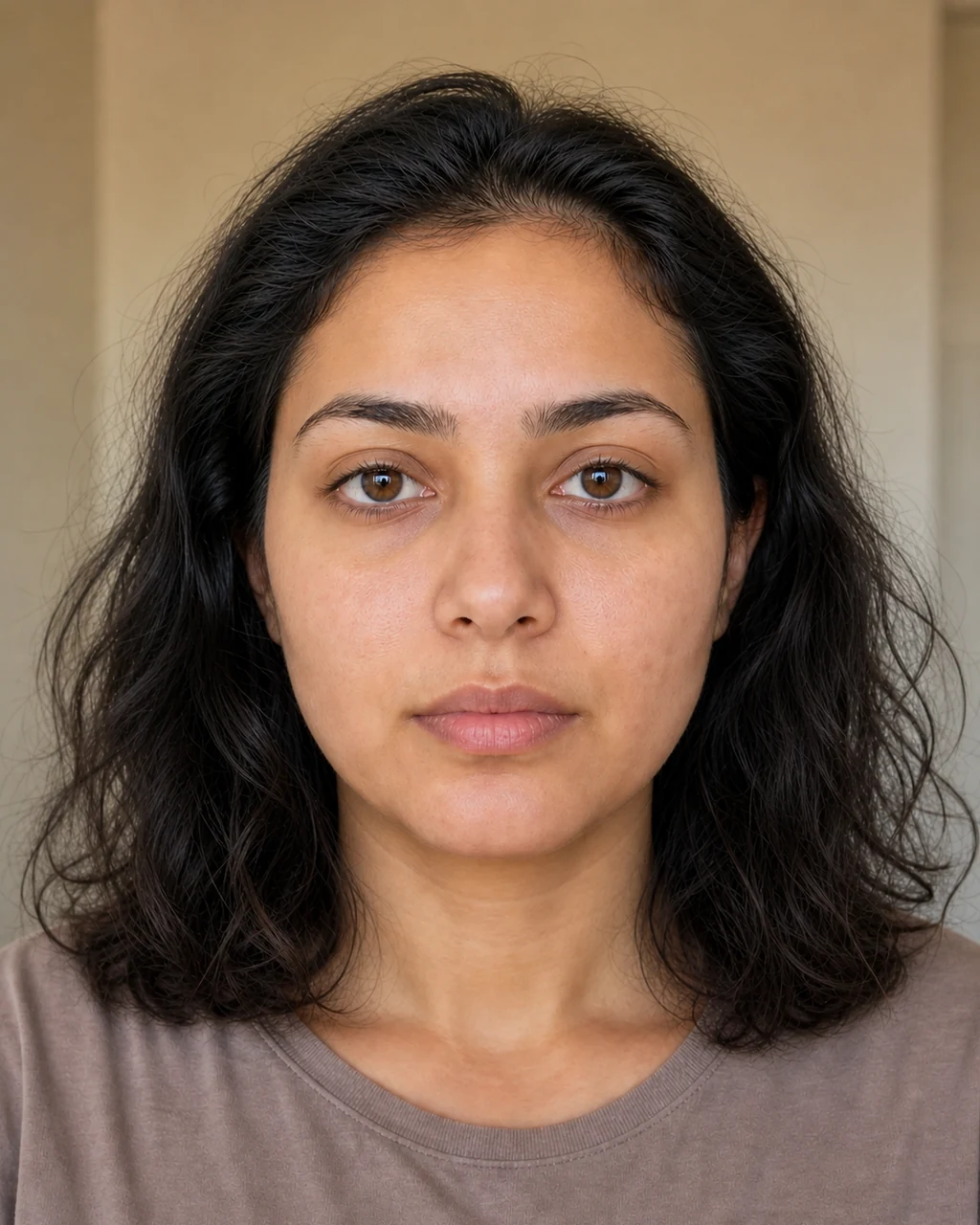
AI "after" simulation
An illustrative simulation of consistent care over 6–12 months — not a prediction of real results.
BeforeAI after
BeforeAI afterDrag to compare
5
5. Your routine
The plan laid out as a day, and what to buy for the first week.
Your daily routine
Morning
1Rinse or gentle cleanseFragrance-free, non-foaming cleanserLukewarm water is enough on most mornings.
2MoisturiseLight, fragrance-free moisturiser
3ProtectBroad-spectrum SPF 50Two finger-lengths for face and neck, every day.
Evening
1CleanseFragrance-free, non-foaming cleanser
2Even out toneNiacinamide serum (4–5%)A few drops on dry skin, on the evenings without the acid.
3MoisturiseLight, fragrance-free moisturiser
Weekly
1Exfoliate, twice a weekLeave-on lactic acid productFrom week 5, in place of the niacinamide on those evenings.
2Condition the lengthsLeave-in conditioner after each washAir-dry where you can; heat protectant on styling days.
Week-1 shopping list
Broad-spectrum SPF 50Stops the cheek marks from darkening, so the rest can work.€10–€20
Fragrance-free gentle cleanserCleans without stripping the skin barrier.€6–€12
Light fragrance-free moisturiserKeeps the barrier calm, morning and evening.€6–€15
Niacinamide serum (4–5%)Helps the darker marks on the cheeks fade over a few months.€8–€20
Roughly, in total:€30–€67
Typical EU prices; any product of the same type works. We earn nothing from what you buy.
6
6. Sources
The published studies the plan rests on.
Every published study the plan cites, listed once. Each step also shows its own under “Evidence”.
Educational tool, not medical advice. This tool provides general, non-surgical aesthetic options supported by published studies where available. Always consult a licensed dermatologist or aesthetic medicine doctor before starting any treatment. AI-generated "after" images are illustrative simulations only, not predictions of real results.
Get your own report
Your score and an analysis preview are free. Pay only if you want the rest.