A colour consultant holds fabric under your chin, one shade at a time, and watches your face rather than the cloth. A shade that suits you makes skin look even and eyes clear. One that doesn't casts shadows under the eyes, greys the skin or makes redness stand out.
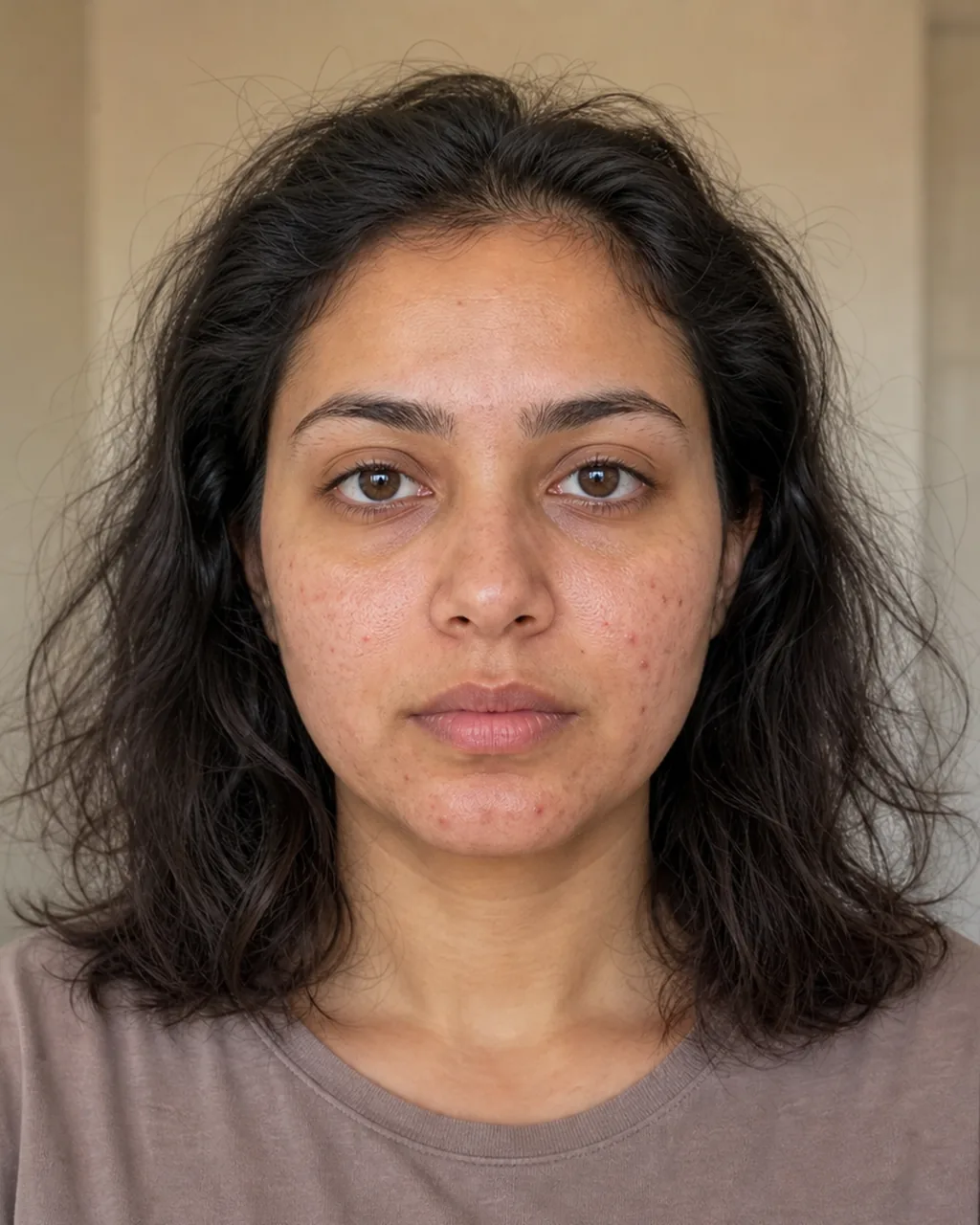
Your Colour Portrait does the same on your photo. It lays fabric in each shade under your own face, and you slide between two at once: ivory against optic white, a soft colour against a strong one. The difference is often obvious the moment you see it.
Inside the sample report
Mira Studio
↔
A · Dusty rosePersimmon · B
The draping room
Two shades. One face.
Slide the fabric beneath the chin. The muted shade gives a quieter frame. The stronger colour draws the eye to the neckline. Pick the one that makes your skin look clearer — that is your direction.
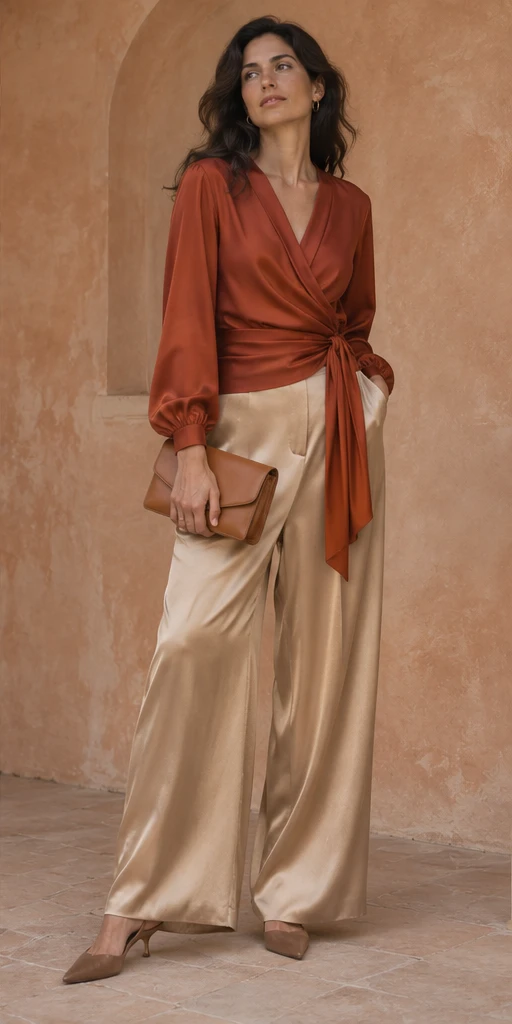
Sample colour edit
Clay & rose
In this photo: medium colouring, a neutral undertone and moderate contrast. Estimated from this photo.
What your palette is
Mira reads three things from your photos: the depth of your skin (fair to deep), its undertone (warm, cool or neutral) and the contrast between your skin, hair and eyes. It reads visible colour only, never ethnicity. From those it picks one of four palette families and gives you six named shades.
Each shade has a job, which makes it easier to shop from than a list of “your colours”.
Two neutrals for the pieces you wear most
A soft colour and a statement colour
A light shade to wear near your face
A deep base for trousers, coats and bags
What you get
Your Colour Portrait: six shades draped on your own photo, with side-by-side comparisons
Your Style Study: three outfit looks in your colours, for everyday, work and evening, saved as cards
Your Ritual and 3-phase plan for skin and hair, so colour and care work together
Your dossier as a PDF to keep, and Ask Mira for questions about it
How it works
1Answer a few questions and take a selfie facing a window.
2Pay once. A few minutes later your dossier is ready: open the Colour Portrait and try each shade against your face.
3Add three quick photos, both sides of your face and the top of your head, for the in-depth reading.
Honest limits, next to an in-person session
A photo is not a mirror. Lamp light, a phone's colour correction, makeup and hair dye all shift how colour reads on camera. When your undertone or contrast is hard to judge, Mira says so, marks the reading as limited and shows a second palette to compare.
An in-person session with a trained consultant takes about two and a half hours, with real fabric in daylight and someone to ask as you go. One UK consultant lists £280 for it. Mira gives you a considered starting point at home, and you can check it again with a new photo whenever you like.
Bare skin or very light makeup reads best. Foundation and bronzer change the undertone the camera sees, so take your photos before you put them on, facing a window in daylight.
Is this the same as seasonal colour analysis?
It answers the same question with different names. Instead of a season, you get a palette family with six named shades, each with a job, and you see every one of them draped on your own face.
Does it work on every skin tone?
Yes. Depth, undertone and contrast are read separately, from fair to deep skin. Light matters more than skin tone: under tinted or uneven light Mira marks the reading as limited and shows a second palette, rather than guessing.
What if I dye my hair?
Mira reads your colouring as it is in the photo. Contrast between hair and skin is part of the reading, so after a big change of hair colour, take a new scan.
How much does it cost?
The complete assessment, with the Colour Portrait, Style Study, Ritual and plan, is €49 once, paid before the analysis runs. No subscription. There is no free version; the sample dossier shows every chapter first.
MiraSkinLab is an educational, cosmetic tool and not a medical device. It does not diagnose, treat or rule out any condition.