Progress · measurement
Progress photos: why 6–8 weeks is the honest interval
Same light, same angle, same distance — consistency between photos tells you more than scanning often ever will.
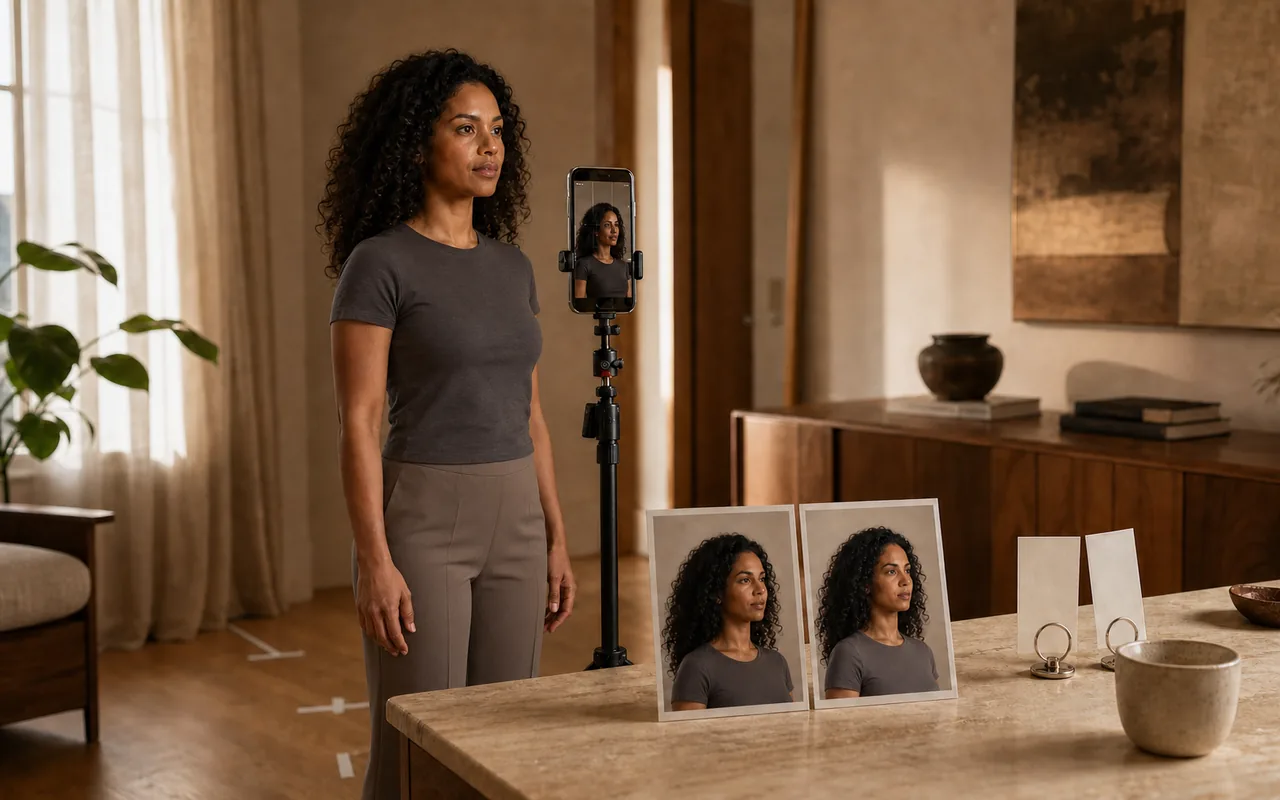
Fewer measurements, a clearer signal
Daily and weekly photos mostly capture changes in lighting, hydration and expression rather than a real trend. Skin and hair change slowly; the noise between two photos taken a week apart is often larger than the change you are trying to see.
A 6–8 week interval gives a routine time to do something visible, and makes the comparison mean more than the conditions on the day.
One bad night shows up on camera
Sleep is a good example of how much a face varies from day to day. In a controlled study, the same people photographed after sleep deprivation were rated as having more hanging eyelids, redder and more swollen eyes, darker circles under the eyes and paler skin. In another, observers judged sleep-deprived people as less healthy and more tired than the same people after a normal night.
If one night can do that, a single photo taken on a tired morning can easily erase — or invent — weeks of progress.
Repeat the light
Light changes how skin looks more than almost anything else. Use daylight from the same window, facing it, at roughly the same time of day. Avoid direct sun, overhead bathroom lights and the flash: they deepen shadows in some places and flatten texture in others.
 Face the windowEven light on both cheeks
 Side lightA shadow crosses one cheek

Repeat the angle and the distance
Hold the phone at eye level, about an arm's length away, and keep that distance the same every time. A phone held close to the face distorts proportions — the nose looks larger and the face narrower — so changing the distance between photos changes the face in the picture.
Take one photo straight on and one from each side at about 45 degrees. For hair, add the parting, the crown and the hairline.
Remove what the camera adds
Turn off beauty filters, portrait mode and automatic skin smoothing, which some phones apply to the front camera by default. Pull your hair back, take off makeup and keep a neutral, relaxed expression — a smile changes the lines around the eyes and mouth.
How MiraSkinLab uses this
During a re-scan, MiraSkinLab shows your original photo as a faint alignment layer so you can match the framing. Each photo is also checked for light, angle and sharpness: if a photo isn't good enough to compare, the result says so instead of reporting a change. Score movements of about two points either way are treated as measurement noise, not progress.